
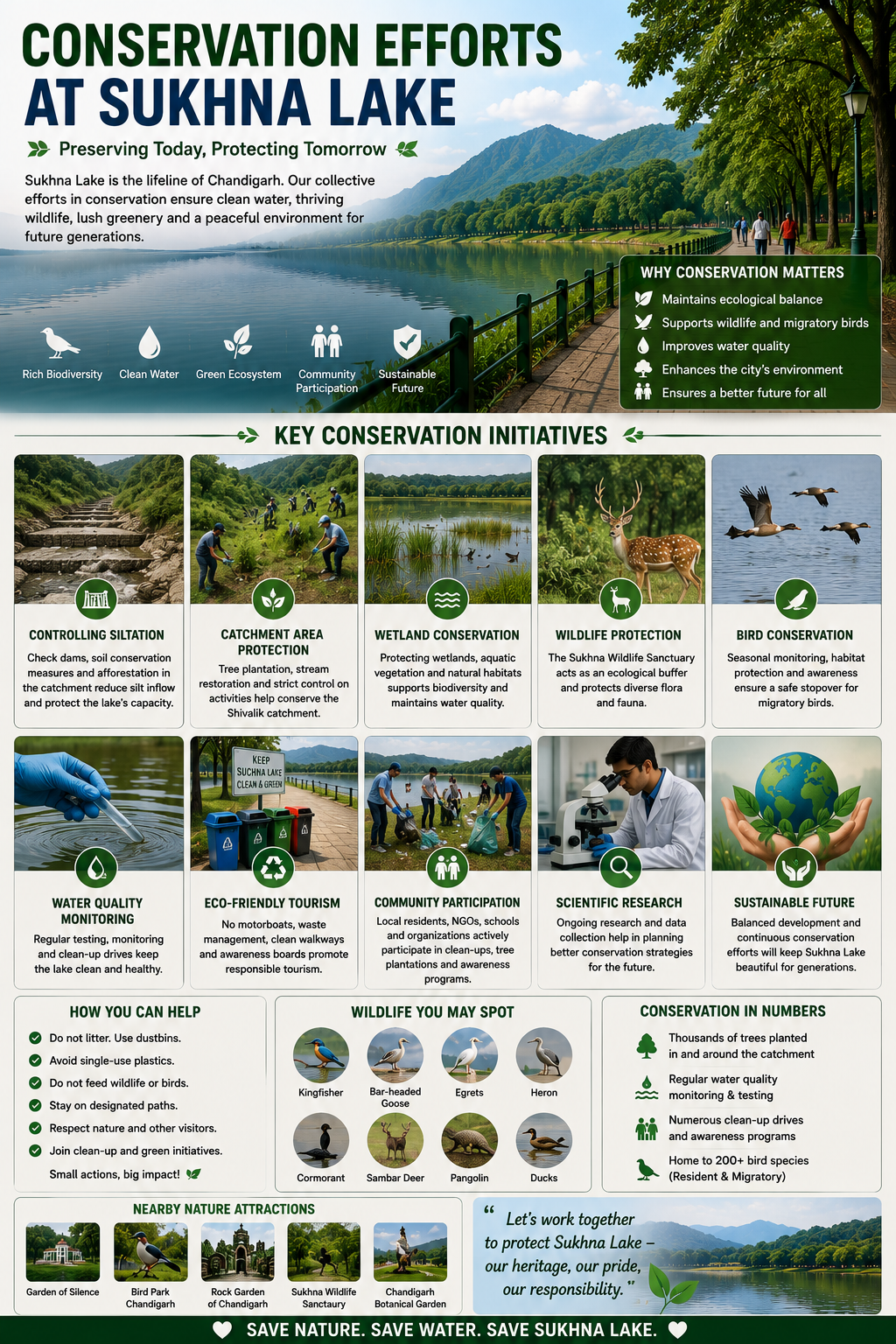
Conservation Efforts at Sukhna Lake: Protecting Chandigarh’s Lifeline for Future Generations
Sukhna Lake is more than just Chandigarh’s most iconic tourist destination—it’s a vital ecological asset that supports biodiversity, recreation, and the city’s environmental health. Every year, thousands of residents and tourists visit the lake to enjoy boating, birdwatching, morning walks, and breathtaking views of the Shivalik Hills. However, preserving this beautiful ecosystem requires continuous planning, scientific management, and public participation.
The Conservation Efforts at Sukhna Lake demonstrate how sustainable urban planning and environmental stewardship can work together. From controlling siltation and restoring wetlands to protecting wildlife and promoting eco-friendly tourism, Chandigarh has implemented several initiatives to safeguard this treasured landmark for future generations.
Why Sukhna Lake Needs Conservation
Created in 1958 by damming the seasonal Sukhna Choe, Sukhna Lake depends largely on monsoon rainfall and runoff from the Shivalik Hills. Over the decades, natural erosion in the catchment area has carried large amounts of silt into the lake, gradually reducing its water-holding capacity.
Urban development, pollution, invasive plant species, and climate change have also increased pressure on the lake’s delicate ecosystem.
These challenges make Conservation Efforts at Sukhna Lake essential for maintaining its ecological balance and ensuring that it continues to serve as Chandigarh’s green heart.
Controlling Siltation
One of the biggest environmental challenges facing Sukhna Lake is silt deposition.
To reduce the inflow of sediment, authorities have undertaken several measures, including:
- Construction of check dams in the catchment area
- Soil conservation projects
- Afforestation on Shivalik slopes
- Restoration of seasonal streams
- Strengthening erosion control measures
These initiatives help slow soil erosion before it reaches the lake.
Catchment Area Protection
The forests surrounding Sukhna Lake play a crucial role in protecting its water quality.
The catchment area has been safeguarded through:
- Large-scale tree plantation drives
- Restricting unauthorized development
- Native vegetation restoration
- Controlled grazing practices
- Regular ecological monitoring
Healthy forests help retain rainwater while reducing sediment runoff.
Wetland Conservation
Wetlands surrounding the lake support numerous plant and animal species.
Conservation projects focus on:
- Protecting marshy habitats
- Maintaining water quality
- Preventing illegal dumping
- Conserving aquatic vegetation
- Restoring natural ecosystems
These wetlands provide essential breeding grounds for birds and aquatic life.
Wildlife Protection
The Sukhna Wildlife Sanctuary, located adjacent to the lake, covers nearly 2,600 hectares and serves as an ecological buffer protecting the lake’s northern catchment.
The sanctuary is home to:
- Sambar deer
- Barking deer
- Wild boars
- Pangolins
- Jungle cats
- Leopards (rare sightings)
- Hundreds of resident and migratory bird species
Protecting this sanctuary is an important part of the Conservation Efforts at Sukhna Lake, as it helps preserve biodiversity and maintain ecological balance.
Conserving Migratory Birds
Every winter, Sukhna Lake becomes a temporary home for thousands of migratory birds arriving from Central Asia, Europe, and Siberia.
Authorities support bird conservation through:
- Habitat protection
- Wetland management
- Water quality monitoring
- Public awareness campaigns
- Wildlife surveillance
Birdwatchers and photographers are encouraged to observe birds responsibly without disturbing their natural behavior.
Water Quality Monitoring
Maintaining clean water is one of the top priorities.
Regular monitoring includes:
- Testing water quality
- Measuring oxygen levels
- Monitoring aquatic life
- Removing floating waste
- Controlling pollution sources
These efforts help ensure that the lake remains healthy for wildlife and recreational activities.
Eco-Friendly Tourism
Sukhna Lake has become an excellent example of sustainable tourism.
Several eco-friendly practices include:
- Motorboat restrictions
- Waste management systems
- Dustbins throughout the promenade
- Awareness signage
- Plastic reduction campaigns
- Clean-up drives
The absence of motorized watercraft helps preserve the lake’s peaceful atmosphere while reducing pollution.
Community Participation
Local residents actively contribute to lake conservation.
Community initiatives include:
- Tree plantation programs
- Lake clean-up campaigns
- Environmental awareness events
- School educational visits
- Nature walks
- Bird conservation activities
Public involvement plays an important role in protecting the lake.
Role of Scientific Research
Environmental experts regularly study the lake to improve conservation strategies.
Research focuses on:
- Sedimentation patterns
- Biodiversity assessment
- Water quality
- Climate impact
- Wetland restoration
- Sustainable management practices
Scientific monitoring supports long-term planning and informed decision-making.
Climate Change and Future Challenges
Climate change presents new challenges for Sukhna Lake.
Potential impacts include:
- Irregular rainfall
- Increased evaporation
- Changing bird migration patterns
- Greater pressure on water resources
Adaptive conservation strategies are becoming increasingly important to address these long-term environmental changes.
How Visitors Can Help
Every visitor can contribute to the Conservation Efforts at Sukhna Lake.
Simple actions include:
- Avoid littering.
- Use designated dustbins.
- Do not feed wildlife.
- Respect birds and natural habitats.
- Avoid single-use plastics.
- Stay on marked pathways.
- Support eco-friendly tourism.
Responsible tourism helps preserve the lake for future generations.
Nearby Nature Attractions
Visitors interested in conservation can also explore:
- Sukhna Wildlife Sanctuary
- Bird Park Chandigarh
- Garden of Silence
- Chandigarh Botanical Garden and Nature Park
- Rock Garden of Chandigarh
These attractions highlight Chandigarh’s commitment to environmental sustainability.
Why Conservation Matters
Sukhna Lake is not only a recreational destination but also an ecological lifeline for Chandigarh. It supports wildlife, improves air quality, moderates the local climate, and provides a peaceful green space for millions of visitors.
The ongoing Conservation Efforts at Sukhna Lake demonstrate that protecting natural ecosystems requires cooperation between government agencies, environmental experts, and the public. Every tree planted, every wetland restored, and every responsible visitor contributes to preserving this remarkable urban lake.
Conclusion
The Conservation Efforts at Sukhna Lake reflect Chandigarh’s long-standing commitment to balancing urban development with environmental protection. Through catchment restoration, wildlife conservation, wetland management, and sustainable tourism practices, the city continues to safeguard one of its most treasured landmarks.
Whether you’re visiting for boating, birdwatching, photography, or simply enjoying a peaceful walk, remembering the importance of conservation ensures that Sukhna Lake remains a thriving natural sanctuary for generations to come.
Read more blogs on – https://topchandigarh.com/
Comments are closed.