Nek Chand Story: The Extraordinary Journey Behind Chandigarh’s Rock Garden
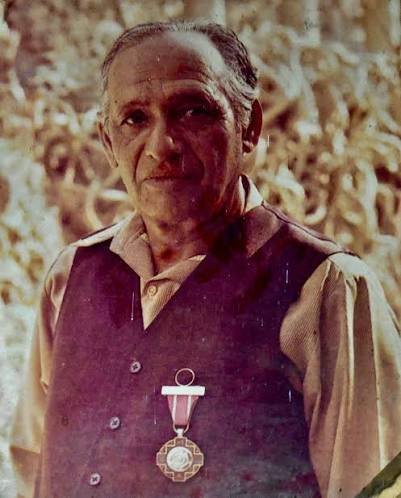
The Inspiring Nek Chand Story: How a Secret 18-Year Project Created Chandigarh’s World-Famous Rock Garden – While the master plan of Chandigarh is celebrated globally as the urban vision of French-Swiss architect Le Corbusier, the city’s most visited cultural landmark was born from the quiet genius of an unsung road inspector. Nek Chand Saini (1924–2015) spent nearly two decades secretly clearing a dense forest gorge along the seasonal streams of the Shivalik foothills.
Transporting discarded industrial rubble, broken porcelain, ceramic bathroom fittings, and glass bangles on his bicycle, he transformed tons of urban waste into a 40-acre wonderland of fantasy courtyards, artificial waterfalls, and over 5,000 sculptures. In this definitive biographical and cultural guide, we explore the complete Nek Chand story, the 18-year secret construction of the Rock Garden, how citizen intervention saved it from government bulldozers, international recognition, and visitor details.
Biographical & Garden Parameter
Historical Facts & Benchmarks
Full Name
Nek Chand Saini (Padma Shri Recipient)
Lifespan
15 December 1924 – 12 June 2015
Birthplace
Shakargarh Tehsil (Barian Kalan), Gurdaspur District (Now in Punjab, Pakistan)
Official Profession
Road Inspector, Public Works Department (PWD), Chandigarh Administration
Year Project Began
1957 (Constructed secretly in a protected forest buffer zone)
Government Discovery Year
1975 (Formally inaugurated to the public in 1976)
Total Land Area Today
Over 40 Acres (Divided across Phase 1, Phase 2, and Phase 3)
Early Life: From Partition Refugee to City Road Inspector – Nek Chand Story
Born in 1924 in the rural village of Barian Kalan (now in Pakistan’s Punjab province), Nek Chand grew up surrounded by rustic folklore, village clay work, and natural streams. The traumatic Partition of India in 1947 forced his family to leave their ancestral home and migrate to Indian Punjab. By the early 1950s, he secured employment as a modest Road Inspector with the Chandigarh Public Works Department (PWD).
At the time, Chandigarh was undergoing massive construction under Prime Minister Jawaharlal Nehru’s directive to build a forward-looking, modern capital. Dozens of ancient agricultural villages were cleared, generating mountains of demolished masonry, brick, tile fragments, and building waste. While others viewed this rubble as useless landfill, Nek Chand saw artistic potential in every discarded fragment.
1957–1975: The 18-Year Secret in the Forest
Beginning in 1957, Nek Chand selected a secluded patch of wilderness along a dry seasonal stream bed between the Capitol Complex and Sukhna Lake. Because the land was a government-designated forest buffer zone where construction was strictly prohibited, his work had to remain entirely clandestine:
The Midnight Courier: After completing his official daytime inspections on city roadworks, Nek Chand spent his evenings riding his bicycle across construction dumps and demolition sites. He strapped heavy gunny sacks filled with smooth river boulders from the Sukhna choe, discarded pottery, porcelain washbasins, and electrical insulators to his bicycle frame.
Raw Materials Reimagined: Discarded colorful glass bangles were melted and refashioned into expressive eyes and vibrant traditional jewelry for statues. Broken bathroom tiles and ceramic chinaware were cut into mosaic robes, while iron foundry slag, coal burnt refuse, and concrete slurry were sculpted into horses, monkeys, village elders, and dancing girls.
The Kingdom of Sukrani: Nek Chand did not view his work merely as a collection of statues; he envisioned a miniature mythical kingdom ruled by King Sukrani, complete with courtyards for courtiers, animal pavilions, waterfalls, and guard battlements.
18 Years of Solitude: For nearly two decades, working by the flickering light of kerosene torches in the dense jungle, he labored alone without a single laborer, budget, or blueprints.
1975 Discovery: From Threat of Demolition to Public Triumph
In 1975, malaria-eradication survey teams and forest conservators stumbled upon the sprawling 12-acre complex hidden within the thickets. Because it was completely unauthorized and encroached on state forest land, municipal authorities initially prepared demolition crews and bulldozers to raze the site.
However, when senior bureaucrats, local artists, and journalists walked through the serpentine stone corridors and saw the sheer scale, beauty, and discipline of the vision, public sentiment ignited. Citizens organized mass petitions urging the Chandigarh Administration to preserve the garden. Recognizing its artistic brilliance, the government made an unprecedented decision:
Official Adoption: The administration absorbed the site in 1976, officially naming it the Rock Garden of Chandigarh.
Appointment as Director: Nek Chand was relieved of his routine road inspection duties and appointed as the lifetime Director and Creator of the Rock Garden, complete with a dedicated municipal salary and an artisan staff to continue expansion.
Citywide Waste Collection: The administration established collection centers across Chandigarh where citizens and demolition contractors could deposit broken chinaware, glass, and tiles directly for Nek Chand’s creative use.
Architectural Anatomy: The Three Distinct Phases
Covering over 40 acres today, the Rock Garden is structured like an open-air labyrinth divided into three expansive evolutionary phases:
Ranks of village women, dancing queens, stone soldiers, peacocks & monkeys
Phase 3 (The Grand Realm)
Soaring Roman-style camel arches, deep gorges & giant public plazas
Huge public swings, open-air theater stages, camel arcades & aquaria
Global Legacy: Padma Shri, Paris & Outsider Art
Nek Chand’s vision gained international prominence among museum directors, landscape architects, and folk art collectors:
Padma Shri (1984): The Government of India conferred one of its highest civilian honors on Nek Chand for his extraordinary contribution to public art and environmental sculpture.
International Exhibitions: Statues created by Nek Chand have been exhibited in major institutions across the world, including the Musée International d’Art Naïf in Paris, the Hayward Gallery in London, and the American Visionary Art Museum in Baltimore.
Outsider Art Benchmark: International art critics recognize the Rock Garden as one of the premier examples of Outsider Art (Art Brut)—art created outside the boundaries of official culture by self-taught visionaries.
Visiting Rock Garden Today: Hours, Tickets & Sightseeing
Welcoming over 5,000 visitors daily, the Rock Garden remains an essential stop for anyone visiting the City Beautiful:
Operating Timings: Open 7 days a week from 9:00 AM to 7:00 PM (Summer: April to September) and 9:00 AM to 6:00 PM (Winter: October to March).
Entry Tickets: Nominal fees of approximately ₹30 for adults and ₹10 for children.
How to Reach: Located in Sector 1 along Uttar Marg, directly adjacent to Sukhna Lake. Review detailed driving routes, public bus routes, and parking tips in our comprehensive guide on How to Reach Rock Garden Chandigarh.
Nek Chand Saini (1924–2015) was a government road inspector in Chandigarh who secretly transformed 40 acres of urban rubble and recycled materials into the world-renowned Rock Garden of Chandigarh.
What materials did Nek Chand use to build the Rock Garden?
He utilized discarded urban and domestic waste, including broken colorful glass bangles, ceramic crockery, porcelain toilet fixtures, electrical switch insulators, coal slag, and river boulders collected from the Shivalik streams.
Why was the Rock Garden almost demolished in 1975?
Because it was constructed without government authorization on protected state forest land. However, strong public outcry, media attention, and artistic admiration persuaded the administration to preserve the site and appoint Nek Chand as its director.
Did Nek Chand receive any national honors for his work?
Yes. In 1984, the Government of India awarded Nek Chand the prestigious Padma Shri for his pioneering contribution to environmental art and sculpture.

Comments are closed.