
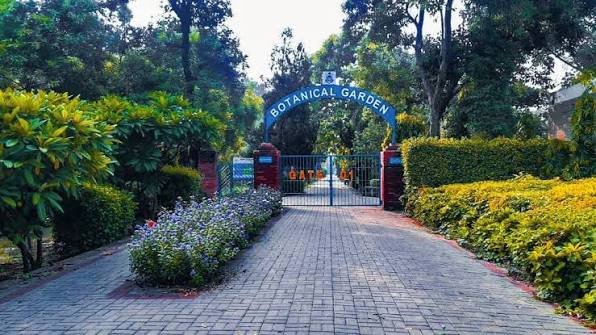
PU Botanical Garden Guide: Timings, Location, Attractions & Things to Know
PU Botanical Garden Guide: Timings, Location, Attractions & Things to Know

Spread across around 16 acres, the garden is managed by the Department of Botany, Panjab University. It contains a remarkable collection of trees, ornamental plants, ferns, orchids, cacti, bamboo and aquatic plants. The university describes it as a repository of plant material for botanical studies as well as an important resource for conserving plant biodiversity.
Whether you are a Panjab University student, nature lover, botany enthusiast, photographer or someone searching for peaceful places in Chandigarh, this guide covers what you should know before planning a visit.
What Is PU Botanical Garden?
The Panjab University Botanical Garden, officially known as the P.N. Mehra Botanical Gardens, is attached to the Department of Botany at Panjab University.
The garden is named after Prof. P.N. Mehra, who played an important role in establishing and developing the university’s Botany Department. The Department of Botany itself has a long academic history, having been established in Lahore in 1919 and later shifting to Chandigarh.
Unlike a conventional public park, the garden has an educational and scientific purpose. Different plant collections are maintained systematically so they can support teaching, research, conservation and awareness.
The garden is also part of Panjab University’s large Sector 14 campus, which includes academic departments, hostels, sports facilities, parks, the Student Centre and other university facilities.
PU Botanical Garden Location
The PU Botanical Garden is located in Sector 14, Chandigarh, within the Panjab University campus.
Address:
Department of Botany, Panjab University, Sector 14, Chandigarh, U.T. 160014.
The Department of Botany lists its address at Kashyap Block, Panjab University, Sector 14, Chandigarh.
If you are already on the Panjab University campus, reaching the Department of Botany area is relatively convenient. Visitors should follow university campus directions and check access arrangements before planning a dedicated visit.
What Can You See at PU Botanical Garden?
One of the biggest reasons to visit the Botanical Garden Panjab University is its variety of specialised plant sections.
1. Arboretum
The arboretum is one of the garden’s major attractions. According to the Department of Botany, it contains nearly 225 species of trees.
This makes it particularly interesting for students studying plant identification, tree diversity and ecology. It is also a pleasant area for anyone interested in learning more about Chandigarh’s plant life.
2. Cactus House
The Cactus House contains more than 100 species of cacti, according to Panjab University’s Department of Botany.
It provides an opportunity to see different forms of plants adapted to dry environments without travelling to a desert region.
3. Orchid House
The Orchid House is another notable feature of the garden. It houses orchids collected from different parts of India.
For plant enthusiasts and photographers, this can be one of the more interesting sections of the garden.
4. Fern House
The Fern House contains nearly 50 species of ferns and fern allies.
The collection gives students and visitors an opportunity to observe plants that differ significantly from flowering plants and is particularly useful for anyone interested in plant evolution and diversity.
5. Bambusetum
The garden also has a Bambusetum, featuring more than two dozen rare bamboo species.
Bamboo diversity is one of the distinctive features of the P.N. Mehra Botanical Gardens, making this section especially relevant for botany students and researchers.
6. Water Garden
The water garden contains lily ponds with species of Nelumbium and Nymphaea.
The aquatic plant collection adds a different character to the garden and can be especially attractive when the plants are flowering.
7. Greenhouse and Nursery
The garden also has an automated greenhouse for growing plants under controlled conditions.
Its nursery is used to raise, multiply and acclimatise plants before they are transplanted. This makes the garden more than just a recreational green space—it also functions as an important academic and conservation facility.
Why Is PU Botanical Garden Important?
The importance of the Panjab University Botanical Garden Chandigarh goes beyond its appearance.
The garden provides plant material for botanical education and research while contributing to the conservation of plant biodiversity. The Department of Botany works in areas including plant propagation, biodiversity conservation and economically important plants.
Panjab University’s environmental initiatives have also included the Navgraha Vatika at the P.N. Mehra Botanical Garden, created to raise awareness about the relevance of the Navgraha Vatika concept.
For students, therefore, the garden can be viewed as a living classroom where plant diversity can be observed beyond textbooks and laboratories.
Is PU Botanical Garden Good for Students?
Absolutely. The garden can be particularly useful for students studying:
- Botany
- Biology
- Environmental science
- Biotechnology
- Agriculture-related subjects
- Ecology
- Plant science
Students can observe different plant groups and habitats directly, making the experience useful for academic learning.
Educational groups have also visited the garden to study its cactus collection, gymnosperms, bamboo diversity and medicinal and ornamental plants.
For ordinary university students, it can also provide a quieter environment compared with busy campus areas.
Best Time to Visit PU Botanical Garden
If visitor access is available, morning hours are generally a good choice for exploring a botanical garden. The weather is usually more comfortable, and the softer light can also be better for photography.
Spring and periods when flowers are in bloom can make the garden particularly attractive. However, plant flowering varies by species and season.
Important: Check Before Visiting
Unlike Chandigarh’s major public gardens, the P.N. Mehra Botanical Gardens is a university botanical garden attached to the Department of Botany. Publicly available third-party listings can show inconsistent opening hours, so it is better to confirm access and visiting arrangements with the Department of Botany before making a special trip.
The Department of Botany lists its official contact details as +91 172 2779510 / 2534001.
PU Botanical Garden vs Chandigarh Botanical Garden
Don’t confuse the Panjab University Botanical Garden with Chandigarh’s other Botanical Garden.
Chandigarh Tourism identifies two botanical gardens in the city: one near the Rock Garden/Sukhna Lake area and another at Panjab University.
The Chandigarh Botanical Garden near Sarangpur is a separate public green attraction. Chandigarh Tourism lists its location at Village Sarangpur on the PGI-Kurali Road and currently lists daily opening hours of 5:00 AM to 9:00 PM with no entry fee.
The PU Botanical Garden, on the other hand, is the specialised university garden maintained by the Department of Botany.
Tips for Visiting PU Botanical Garden
Keep these points in mind when planning your visit:
- Confirm visitor access before going.
- Check current timings with the Department of Botany.
- Wear comfortable footwear.
- Avoid disturbing plants or flowers.
- Do not pluck leaves, flowers or seeds.
- Keep the garden clean.
- Follow university campus rules.
- Carry water during warmer months.
- Bring a camera if photography is permitted.
- Students can use the garden as a practical learning resource.
Final Thoughts
The PU Botanical Garden Chandigarh is one of the city’s lesser-known green spaces and an interesting destination for people who want to explore Chandigarh beyond its usual tourist attractions.
Its biggest strength is its combination of nature, education, research and conservation. From the cactus and orchid houses to the arboretum, fern collection, Bambusetum, water garden, greenhouse and nursery, the P.N. Mehra Botanical Gardens offers much more than a simple walk through a park.
For Panjab University students and botany enthusiasts, it can be particularly valuable as a living resource for understanding plant diversity. For other visitors, it offers a quieter way to experience the green side of Chandigarh.
Before visiting, however, confirm the latest access and timing information with the Department of Botany because this is a university-managed facility rather than a conventional municipal tourist garden.
University Admission Guide in Chandigarh: Courses, Eligibility, Process & Tips
Comments are closed.