
Student Centre Architecture: History, Design & Cultural Importance in Chandigarh

The Student Centre Architecture at Panjab University is one of the most recognisable examples of student-oriented architecture in Chandigarh. Commonly called the PU Student Centre, this iconic campus landmark is more than a place to eat, meet friends or attend student activities. Over the years, it has become an important part of Panjab University’s identity and student culture.
Located at the heart of the Panjab University campus in Sector 14, the Student Centre attracts students throughout the day. Its distinctive circular form, central structure and open surroundings make it visually different from many conventional university buildings.
For architecture enthusiasts, Chandigarh visitors and students searching for the Panjab University Student Centre architecture, the building offers an interesting example of how architecture can become closely connected with campus life.
What Is the Panjab University Student Centre?
The Panjab University Student Centre is one of the most popular gathering spaces on the university campus. Students use the area for informal meetings, eating, socialising and participating in campus activities.
Panjab University’s official campus profile lists the Student Centre among the major facilities of its Sector 14 campus, alongside Gandhi Bhawan, the Fine Arts Museum, University Library, parks and the Botanical Gardens.
Unlike a building designed exclusively for classrooms or administrative work, the Student Centre has a strongly social character. Its design encourages people to gather around a central space and interact.
Where Is the Student Centre Located?
The PU Student Centre is located inside Panjab University’s Sector 14 campus in Chandigarh.
Panjab University’s campus is spread across approximately 550 acres in Sectors 14 and 25. The university describes the campus as having academic departments, libraries, student facilities, hostels, sports facilities, parks and other institutional infrastructure.
Its central location makes the Student Centre easily accessible from several parts of the campus.
For generations of students, meeting at the Student Centre has become a familiar part of university life.
Architecture of Student Centre Chandigarh
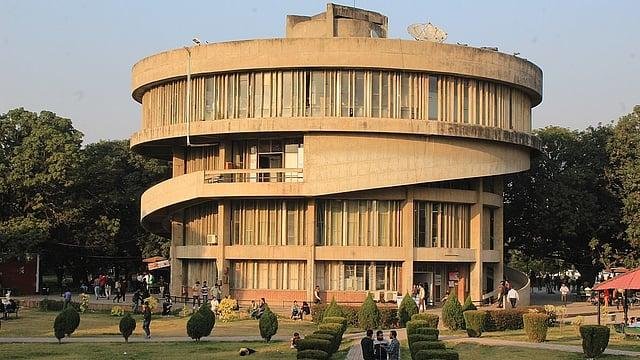
The Student Centre Chandigarh architecture is particularly recognisable because of its distinctive circular planning and central architectural element.
Rather than looking like a conventional rectangular academic block, the structure has a more open and visually expressive composition. The central building creates a focal point, while the surrounding circular circulation and open areas provide space for students to move, sit and interact.
This combination of built form and open space is important to understanding why the Student Centre works so well as a social campus landmark.
Circular Form
One of the first things visitors notice is the circular layout.
The circular organisation creates a natural gathering environment around the central structure. Students can approach the centre from different directions instead of entering through a single formal front entrance.
This makes the architecture feel less institutional and more informal.
Central Dome-Like Structure
The Student Centre’s central architectural form is its most recognisable visual feature.
The elevated, curved structure creates a strong focal point and gives the building its distinctive silhouette. It has become one of the visual symbols associated with Panjab University.
For students and visitors taking photographs around campus, this central structure is often the most recognisable element.
Open Circulation
Another important feature is the relationship between the building and its surrounding open area.
Instead of completely enclosing activities within rooms, the Student Centre allows students to gather in the surrounding spaces. This creates a transition between architecture and public campus space.
That relationship is particularly important in a university environment, where informal interaction can be just as important as formal classroom learning.
Student Centre and Chandigarh’s Architectural Identity
The Student Centre should also be viewed within the larger architectural context of Chandigarh.
Chandigarh is internationally associated with the work of Le Corbusier, whose planning principles strongly influenced the city’s major institutional buildings, Capitol Complex and urban sectors.
However, the architecture of Panjab University represents a broader architectural story. The campus contains buildings and spaces associated with different architects, periods and architectural approaches.
The Student Centre therefore provides an interesting contrast to Chandigarh’s monumental government architecture.
Instead of representing government authority or civic administration, it represents student life, interaction and campus culture.
Why Is the Student Centre Important to Students?
Architecture becomes memorable when people associate experiences with it. This is particularly true of the PU Student Centre.
Students have traditionally used the area for:
- Meeting friends
- Eating and drinking
- Informal discussions
- Student activities
- Cultural events
- Social gatherings
- Taking photographs
- Spending time between classes
The building therefore functions as more than physical infrastructure.
It is a social landmark of Panjab University. For many students, the Student Centre becomes one of the first places they associate with their university experience.
Student Centre as a Cultural Landmark
The importance of the Student Centre extends beyond architecture.
Panjab University has a long history of student organisations, cultural activities, academic debates and campus events. The Student Centre has consequently become closely associated with the social and cultural life of the university.
Its open environment makes it suitable for informal interaction and student gatherings.
This is one reason the building remains recognisable even to people who may not study architecture.
Student Centre vs Traditional University Buildings
Traditional university architecture often focuses on classrooms, laboratories, offices and libraries.
These buildings are generally designed around specific academic functions.
The PU Student Centre follows a different approach.
| Feature | Traditional Academic Building | Student Centre |
|---|---|---|
| Main purpose | Teaching/administration | Social interaction |
| Layout | Formal | More open |
| Circulation | Corridor-based | Open/circular |
| User experience | Structured | Informal |
| Gathering | Secondary | Central |
| Identity | Academic | Cultural and social |
This distinction helps explain why the Student Centre has such a strong place in university culture.
Best Time to See Student Centre Architecture
If you want to photograph or explore the Student Centre Panjab University, different times offer different experiences.
Morning: The campus is relatively calm, making it easier to observe the architecture.
Afternoon: Student activity around the centre becomes more noticeable.
Evening: The area can become particularly lively, with students gathering after classes.
For architecture photography, morning or late afternoon can provide softer natural light. Visitors should follow current university access and campus rules.
What to See Near the Student Centre
If you are exploring Panjab University, don’t limit your visit to the Student Centre.
The university’s official campus profile highlights several important facilities and landmarks, including:
- Gandhi Bhawan
- Fine Arts Museum
- University Library
- Botanical Gardens
- Parks
- Sports facilities
- Academic departments
- Student Centre
This makes the university campus a useful destination for anyone interested in Chandigarh architecture and campus design.
Why Architecture Students Should Visit
Architecture students can find several lessons in the Student Centre.
The building demonstrates how architecture can support social behaviour rather than simply provide enclosed functional spaces.
Important ideas to observe include:
- Relationship between built and open space
- Circular planning
- Pedestrian movement
- Central focal points
- Informal gathering areas
- Campus-scale architecture
- Human interaction with public space
The Student Centre is therefore a useful case study for understanding institutional architecture in Chandigarh.
Student Centre Architecture and Student Life
Perhaps the most interesting aspect of the building is the way its architecture and social function complement each other.
A university needs classrooms and laboratories for formal education, but students also need places to meet, exchange ideas and build friendships.
The Student Centre provides that social layer.
Its architecture encourages movement and gathering rather than separating people into individual rooms. This helps explain why it has remained an important campus landmark.
Final Thoughts
The Student Centre Architecture in Chandigarh demonstrates how a university building can become much more than a functional structure. At Panjab University, the Student Centre has developed into a symbol of student life, social interaction and campus identity.
Its circular planning, distinctive central form and surrounding open space give it a recognisable architectural character. At the same time, its everyday use by students gives the building a cultural significance that cannot be understood simply by looking at its physical design.
For anyone exploring Panjab University architecture, Chandigarh’s educational heritage or the city’s lesser-known architectural landmarks, the Student Centre is an important place to include.
Whether you are an architecture student, a Panjab University student, a Chandigarh resident or simply interested in the city’s built environment, the PU Student Centre offers an excellent example of how architecture, community and student culture can come together in one campus landmark.
PU Botanical Garden Guide: Timings, Location, Attractions & Things to Know
Comments are closed.