Navigating Chandigarh Transport (2026 Guide: CTU Local Buses, Routes, Metro Updates, Cabs & Auto Fares) – Designed with meticulous geometric precision by Swiss-French modernist architect Le Corbusier, the City Beautiful boasts India’s most orderly urban transit grid. However, for first-time tourists, university students, and newly relocated professionals, navigating chandigarh transport requires understanding the city’s unique 7Vs road hierarchy, dual inter-state bus terminals (ISBT Sector 17 and ISBT Sector 43), and expansive bus corridors. Whether you rely on clean, air-conditioned ctu local bus routes chandigarh for budget daily commutes, prefer the eco-friendly SmartBike public bicycle network, or require app-based on-demand rides with predictable chandigarh auto rickshaw and cab fares, the city’s transit infrastructure is remarkably accessible.
While neighboring metropolitan areas struggle with congested choke points, the well-planned network of public transport in chandigarh makes traveling across the Tricity smooth and predictable. In this comprehensive 2026 commuter guide, we break down bus timetables, digital ticketing apps, auto-rickshaw meter rates, railway connections, airport transit, and practical commuter tips.
Transit Mode
Operating Authority / Provider
Average Fare Structure (2026)
Operating Hours
Best Suited For
CTU HVAC Electric Buses
Chandigarh Transport Undertaking (CTU)
₹10 – ₹25 (Cashless ticketing supported)
05:30 AM – 10:30 PM
Budget daily commuting across sectors & Tricity hubs
The foundation of navigating chandigarh transport lies in Le Corbusier’s “7Vs” (Les Sept Voies) road circulation classification system. This system separates pedestrian walkways from heavy high-speed vehicular traffic:
V1 (National Arterials): Major highways leading out of the city toward Delhi, Shimla, and Ludhiana.
V2 (Primary Boulevards): Broad avenues housing major institutions and civic spaces, including Madhya Marg, Jan Marg, and Himalaya Marg.
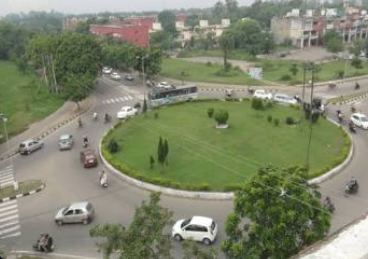
V3 (Sector-Dividing Roads): Fast-moving vehicular grid roads that surround each numbered sector, featuring roundabout intersections and synchronized traffic lights without residential driveways.
V4 (Sector Shopping Streets): The central commercial street of every sector, featuring local markets, banks, cafes, and slow pedestrian-friendly traffic.
V5, V6 & V7 (Neighborhood Paths): Internal loop roads, residential access lanes, and dedicated pedestrian/cycle paths ensuring you never need to walk alongside heavy vehicular traffic. (Discover why this master plan elevates everyday living in our guide to 10 Reasons to Live in Chandigarh).
CTU Local City Bus Network & Major Routes
The backbone of public transport in chandigarh is the Chandigarh Transport Undertaking (CTU), operating a modern fleet of zero-emission electric buses and low-floor diesel HVAC coaches:
Key CTU Route Corridors: Popular ctu local bus routes chandigarh connect major education hubs (Panjab University in Sector 14, PEC in Sector 12), medical institutes (PGIMER, GMCH Sector 32), and commercial centers (Sector 17, Sector 34, and Elante Mall).
Long-Haul Ring Routes: The Outer Ring and Inner Ring services circle major peripheral corridors, offering seamless interchange options at central terminals.
Live Bus Tracking & Passes: Commuters can track buses in real-time via the Chalo App and purchase digital student or daily bus passes directly through cashless UPI counters. (Commuters traveling by bus can reference terminal facilities in our detailed guide to Sector 17 Chandigarh Bus Stand).
Navigating Chandigarh’s Twin Bus Terminals: ISBT 17 vs. ISBT 43
A frequent point of confusion when navigating chandigarh transport is distinguishing between the two primary Inter-State Bus Terminals:
Bus Terminal
Primary Destination Routes
Transit Connections & Highlights
ISBT Sector 17
Haryana, Delhi NCR, Uttar Pradesh & CTU Local City Fleets
Connected to central government offices, shopping plazas, and the starting point for the double-decker tourist bus. (Plan tours via our HOHO Bus Guide).
ISBT Sector 43
Punjab, Himachal Pradesh, Jammu & Kashmir, and Uttarakhand
The regional gateway terminal for direct Volvo buses to Shimla, Manali, Dharamshala, and Amritsar.
Auto-Rickshaws, Cabs & Last-Mile Connectivity
For door-to-door transit, the city provides well-regulated options where chandigarh auto rickshaw and cab fares remain fair and transparent:
On-Demand App Cabs: Uber and Ola operate round-the-clock across Chandigarh, Mohali, Panchkula, and Zirakpur. Airport drops from Sector 17 or Sector 35 typically cost ₹220 to ₹350.
Shared & Metered Auto-Rickshaws: Traditional green-and-yellow CNG autos and battery-operated e-rickshaws wait at market stands and hospital gates. Fixed-route shared autos running along Madhya Marg and Dakshin Marg charge just ₹10 to ₹25 per seat.
SmartBike Public Bicycle Sharing: Chandigarh houses India’s largest dock-based public cycle network, with over 2,500 pedal-assist and mechanical bicycles spread across 600+ stations. Renting a bicycle via the SmartBike app costs ₹10 per 30 minutes, ideal for morning rides along Leisure Valley. (Explore scenic cycle corridors in Leisure Valley Chandigarh).
Airport & Railway Station Connections
Arriving travelers have multiple reliable options within the integrated network of public transport in chandigarh:
Shaheed Bhagat Singh International Airport (IXC): Located on the southern edge in Mohali, the airport is served by dedicated CTU Airport AC Shuttle buses (Route 170 / 170-A) departing regularly from ISBT-17 and ISBT-43, alongside 24×7 app cabs.
Chandigarh Junction Railway Station (CDG): Situated in Daria on the eastern boundary, regular local buses and prepaid auto stands connect incoming Vande Bharat and Shatabdi Express passengers to central sectors in 15 to 20 minutes. (Relocating households to the region? Review vetted services in Packers and Movers in Chandigarh).
Essential Tips for Hassle-Free Commuting in Chandigarh
To avoid transit delays and traffic fines while navigating chandigarh transport, keep these regulations in mind:
Strict Traffic Discipline & CCTV Monitoring: The Chandigarh Traffic Police uses an intelligent traffic management system (ITMS) with automatic number-plate recognition cameras. Always halt before zebra crossings at red lights, obey sector speed limits (typically 50 km/h on V3 roads), and wear seatbelts in cabs.
Master Sector Numbers, Not Landmarks: Unlike other cities where drivers navigate by market names, all directions in Chandigarh are based on sector coordinates (e.g., “Sector 35-C inner market” or “Sector 26 Madhya Marg”).
What is the most economical way of navigating Chandigarh transport?
The most economical way of navigating chandigarh transport is by using ctu local bus routes chandigarh, where non-AC and electric AC bus fares range between ₹10 and ₹25. For short hops, the SmartBike cycle sharing system costs only ₹10 per half hour.
Which bus terminal in Chandigarh connects to Himachal Pradesh and Punjab?
ISBT Sector 43 handles all interstate bus routes heading toward Punjab, Himachal Pradesh (Shimla, Manali), Jammu & Kashmir, and Uttarakhand, whereas ISBT Sector 17 handles buses toward Delhi, Haryana, and Uttar Pradesh.
How are Chandigarh auto rickshaw and cab fares calculated?
Chandigarh auto rickshaw and cab fares for app-based services (Uber/Ola) are calculated dynamically based on distance and vehicle type, typically averaging ₹15 to ₹20 per km. Fixed-route shared autos charge flat rates between ₹10 and ₹30 per passenger.
Is public transport in Chandigarh safe for late-night travel?
Yes. The infrastructure for public transport in chandigarh is considered among the safest in India, backed by 24×7 police PCR vehicle patrols, well-lit sector boulevards, and verified GPS tracking in app cabs.

Comments are closed.