
Evolution of Government Buildings in Chandigarh: A Journey Through Modern Architecture
Government Buildings in Chandigarh
Chandigarh is often celebrated as India’s most successful planned city, renowned for its orderly sectors, wide roads, and architectural excellence. At the heart of this urban masterpiece lies a collection of iconic government structures that symbolize democracy, governance, and modern nation-building. The evolution of these public institutions reflects not only Chandigarh’s growth but also India’s architectural transformation after independence.
Today, the city’s administrative landmarks rank among the most important government buildings in chandigarh, attracting architects, planners, researchers, and tourists from around the world. From Le Corbusier’s monumental designs to modern sustainable developments, Chandigarh’s government architecture continues to influence urban planning across the country.
The Birth of a New Administrative Capital
Following the Partition of India in 1947, Punjab lost its historic capital, Lahore. The need for a new capital city led to the creation of Chandigarh, envisioned as a symbol of a progressive and independent nation.
Le Corbusier was appointed to lead the planning and architectural design of the city. His vision extended beyond residential sectors and public spaces; he sought to create landmark government buildings in chandigarh that would represent the values of democracy, transparency, and modern governance.
The result was the Capitol Complex, which remains one of the most significant examples of modern civic architecture in the world.
The Secretariat: The Administrative Backbone
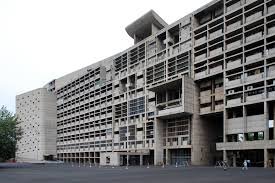
Among the most recognizable structures in the city is the secretariat building in chandigarh. Designed by Le Corbusier, the Secretariat serves as the administrative headquarters for the governments of Punjab and Haryana.
The secretariat building in chandigarh stretches across an impressive length and was one of the largest government office buildings in India at the time of its construction. Its exposed concrete façade, sun-breakers, and repetitive geometric patterns demonstrate Le Corbusier’s commitment to climate-responsive architecture.
Even decades after its completion, the building remains a defining symbol of Chandigarh’s administrative identity.
The High Court and Legislative Assembly
The evolution of civic architecture in Chandigarh cannot be understood without examining the Punjab and Haryana High Court and the Legislative Assembly.
These structures rank among the most famous buildings in chandigarh because of their innovative designs and symbolic significance. The High Court is known for its colorful façade and monumental roof, while the Legislative Assembly is recognized for its distinctive hyperbolic tower and assembly chamber.
Together with the Secretariat, these buildings form the Capitol Complex, which was designated a UNESCO World Heritage Site in 2016.
The Rise of Sustainable Public Architecture
As architectural priorities evolved over the years, Chandigarh began incorporating environmental considerations into public construction projects.
Modern government institutions increasingly emphasize energy efficiency, water conservation, and sustainable materials. Several contemporary projects have been designed following the principles of a green building in chandigarh, reducing environmental impact while maintaining functionality.
The growing focus on sustainability reflects a broader shift in public architecture, where ecological responsibility is becoming just as important as aesthetics and functionality.
Green Building in Chandigarh: A New Era of Design
The concept of a green building in chandigarh aligns perfectly with the city’s original planning philosophy, which emphasized harmony between built spaces and natural environments.
Many recent government and institutional developments now incorporate features such as:
- Solar energy systems
- Rainwater harvesting
- Natural ventilation
- Energy-efficient lighting
- Sustainable construction materials
The emergence of every new green building in chandigarh demonstrates how the city continues to adapt to modern environmental challenges while preserving its architectural heritage.
Famous Buildings in Chandigarh Beyond the Capitol Complex
While the Capitol Complex remains the centerpiece of Chandigarh’s architectural legacy, there are several other famous buildings in chandigarh that contribute to the city’s distinctive character.
These include:
- Panjab University campus buildings
- Government Museum and Art Gallery
- Le Corbusier Centre
- Punjab Engineering College structures
- Various administrative and institutional complexes
These famous buildings in chandigarh collectively showcase the city’s commitment to innovative design and thoughtful urban development.
The Tallest Building in Chandigarh: Changing Skylines
Chandigarh’s original planning guidelines emphasized controlled building heights to maintain visual harmony and preserve the city’s human-scale character. However, modern development has introduced taller structures in selected areas.
When discussing the tallest building in chandigarh, it is important to recognize how building regulations have evolved over time. While early government architecture focused on horizontal expansion, newer commercial and mixed-use developments have gradually introduced greater verticality.
The emergence of the tallest building in chandigarh reflects changing economic and urban development needs while balancing the city’s planning principles.
Highest Building in Chandigarh and Urban Growth
The search for the highest building in chandigarh often reflects public curiosity about the city’s modernization and growth. Unlike many metropolitan areas dominated by skyscrapers, Chandigarh has maintained a relatively low-rise skyline.
This deliberate planning approach has helped preserve the city’s openness, greenery, and architectural coherence. Nevertheless, the highest building in chandigarh represents an interesting contrast between the city’s historic planning philosophy and contemporary development trends.
Urban planners continue to evaluate how vertical growth can be integrated without compromising Chandigarh’s original vision.
Preserving Architectural Heritage
One of the greatest challenges facing Chandigarh today is balancing modernization with conservation. The city’s landmark government structures require ongoing maintenance and restoration to preserve their historical and architectural significance.
Efforts to protect the government buildings in chandigarh include conservation projects, heritage regulations, and public awareness initiatives. These measures ensure that future generations can continue to appreciate the city’s remarkable architectural achievements.
The preservation of these buildings is not merely about protecting concrete structures; it is about safeguarding an important chapter in India’s architectural and urban planning history.
Conclusion
The evolution of government buildings in chandigarh tells a fascinating story of ambition, innovation, and national identity. From the iconic secretariat building in chandigarh and other landmark civic institutions to modern examples of a green building in chandigarh, the city continues to demonstrate how architecture can reflect changing social, environmental, and administrative priorities.
Whether exploring the famous buildings in chandigarh, Government Buildings in Chandigarh, learning about the tallest building in chandigarh, or examining the highest building in chandigarh, visitors gain insight into a city that remains one of the world’s finest examples of thoughtful urban planning.
More than seventy years after its creation, Chandigarh continues to evolve while preserving the architectural vision that made it famous around the globe.