
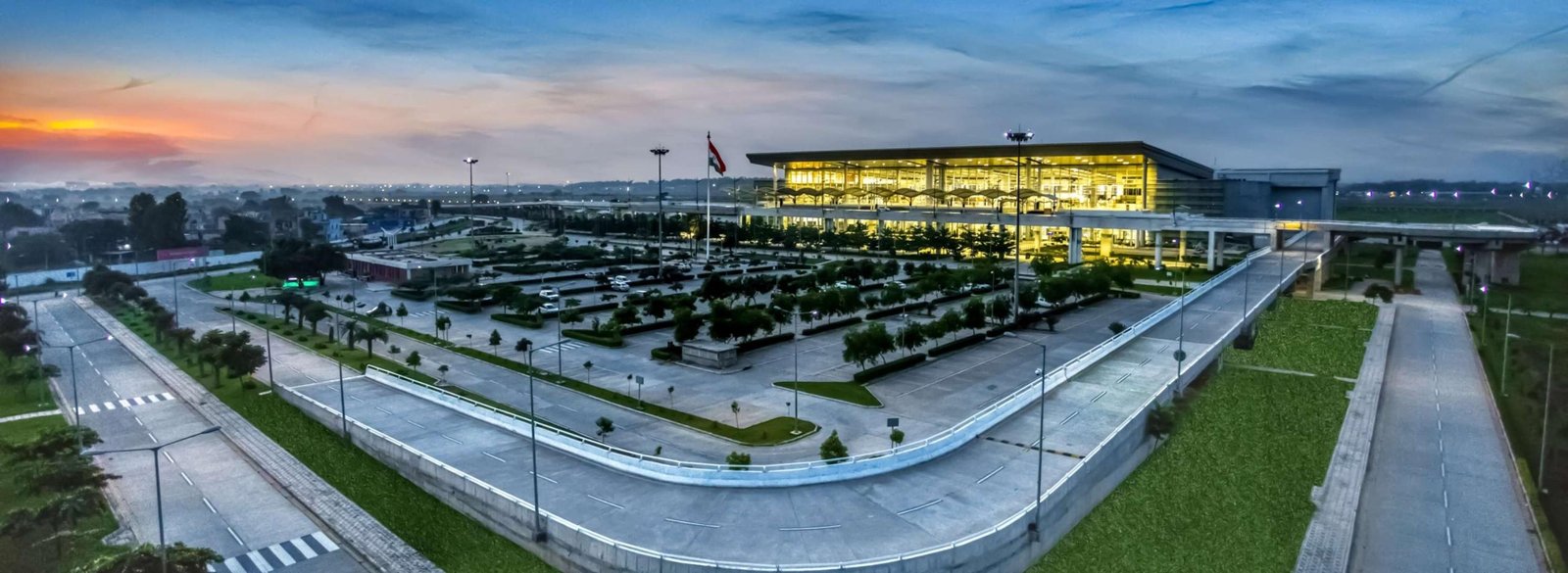
Mohali International Airport Development: Expansion, Connectivity & Future Growth
The Mohali International Airport development, officially known as Shaheed Bhagat Singh International Airport, has become one of the most important infrastructure projects serving the Chandigarh Tricity and the wider Punjab, Haryana and Himachal Pradesh region.
Although commonly called the Mohali Airport or Chandigarh International Airport, the airport is physically located in Mohali, Punjab. It has been operational since October 2015 and is managed by Chandigarh International Airport Limited (CHIAL), a joint venture involving the Airports Authority of India, the Punjab Government through GMADA and the Haryana Government through HSVP.
With improving road connectivity, growing passenger demand and the development of the surrounding Airport Road and Aerotropolis areas, the airport is increasingly influencing the region’s real estate, business and tourism landscape.
Current Capacity of Mohali International Airport
The airport’s existing terminal covers approximately 53,000 square metres and has an annual passenger-handling capacity of around 4.5 million passengers. The AAI fact sheet lists eight boarding gates and 48 passenger check-in counters.
The terminal was designed to handle both domestic and international passengers, providing the infrastructure required for the Tricity’s growing aviation needs.
Passenger growth, however, has increased pressure for better connectivity and additional infrastructure.
Why Mohali Airport Is Important for Chandigarh Tricity
The airport serves a large catchment area covering:
- Chandigarh
- Mohali
- Panchkula
- Zirakpur
- Punjab
- Haryana
- Himachal Pradesh
This makes the airport much more than a local Mohali facility.
For business travellers, students, tourists, NRIs and residents of the Tricity, improved airport connectivity can significantly reduce travel time and make the region more attractive for investment.
The airport’s strategic location also places it close to Mohali’s growing IT City, Airport Road, Aerocity and commercial development corridors.
Airport Connectivity Development
One of the biggest recent developments has been the improvement of road connectivity to the airport.
In 2026, a new alternative route from the Mohali side was developed to provide a shorter and more convenient approach to the airport. The route was intended to reduce dependence on the existing PR-7 corridor and ease congestion for airport-bound traffic.
GMADA had also targeted completion of a link road connecting the Phase 11/Bawa White House area with Airport Road, with officials saying the project would provide relief to commuters travelling between Mohali and the airport.
These road projects are important because airport development is only as effective as the transport network connecting passengers to the terminal.
New Signal-Free Airport Route
The airport’s road network received another boost in September 2026 with the opening of a signal-free alternative route in Mohali.
The new route is designed to improve traffic flow and provide smoother access for airport passengers, particularly from areas of Mohali that previously depended heavily on congested corridors.
Better road connectivity should benefit both daily airport users and the commercial developments growing along Airport Road.
International Flight Connectivity
International connectivity remains one of the most important areas for future airport development.
The airport currently has international operations, but stakeholders have repeatedly called for more direct international destinations, particularly to cities with large Punjabi and Indian diaspora populations.
In Parliament, the government has stated that international flight operations depend on bilateral air-service agreements and that individual airlines ultimately decide whether to launch routes based on commercial viability.
In February 2026, the absence of Point of Call (PoC) status was also raised as an issue affecting the airport’s ability to expand international connectivity. Demands included direct flights to destinations such as London, Singapore and Vancouver.
For the airport’s long-term growth, additional international routes could be particularly important because Punjab has a large overseas diaspora.
Airport Expansion and Modernisation
Airport infrastructure is continuously upgraded based on passenger demand, land availability and operational requirements.
The current AAI fact sheet confirms that the existing terminal has an annual capacity of approximately 4.5 million passengers.
Recent airport activity also indicates continuing investment in passenger facilities. For example, AAI issued a 2026 tender for construction of a ceremonial lounge on the city side of the airport.
Commercial infrastructure is also being expanded. In September 2026, an AAI tender was active for retail outlets at Shaheed Bhagat Singh International Airport, indicating continued development of the terminal’s commercial environment.
Mohali International Airport development and Aerotropolis Development
One of the biggest long-term impacts of the airport is the development of the surrounding Aerotropolis.
The concept is to create an airport-oriented urban and commercial zone containing residential development, business districts, logistics, hospitality and other supporting infrastructure.
The Greater Mohali Area Development Authority’s Aerotropolis plans have faced delays, particularly over land acquisition and compensation issues.
However, in June 2026, the Punjab Government cleared a mechanism for dealing with pending compensation, potentially allowing GMADA to take possession of land in Aerotropolis Pockets A, B, C and D and restart stalled development activity.
This could have significant implications for Mohali’s future urban expansion.
Impact on Mohali Real Estate
Airport development is already influencing property demand around:
- Airport Road
- Sector 66
- Sector 67
- Sector 68
- Sector 79
- Sector 80
- Sector 81-83
- Aerocity
- IT City
Improved airport access can increase demand for residential properties, hotels, office spaces, retail outlets and commercial developments.
However, buyers should not assume that every property near an airport will automatically appreciate. Factors such as road access, zoning, RERA status, surrounding infrastructure and actual development progress remain important.
Airport Development and Tourism
The airport is also becoming more important for regional tourism.
In September 2026, the Haryana Tourism Department opened a Tourist Information and Facilitation Centre at the arrival terminal. The centre is intended to help visitors discover Haryana’s heritage, spirituality, nature and rural tourism destinations, and includes an AI-based digital guide called “Saraswati.”
This reflects the airport’s wider role as a gateway not only to Chandigarh and Mohali but also to destinations across the region.
What Does the Future Hold?
The future of Mohali International Airport depends on several factors:
More International Routes
Additional direct international services could significantly strengthen the airport’s role as a global gateway for Punjab and the Tricity.
Better Road Connectivity
New alternative routes and airport links should make journeys faster and more predictable.
Aerotropolis Development
Progress on land acquisition and infrastructure could transform the airport corridor into a major commercial and residential zone.
Cargo and Logistics
Better air-cargo infrastructure could strengthen Mohali’s position as a logistics and distribution centre for northern India.
Commercial Development
Hotels, retail, offices, restaurants and other businesses are likely to benefit from increasing passenger and commercial activity.
Mohali Airport Development: Key Highlights
| Development Area | Current Importance |
|---|---|
| Existing terminal | 4.5 million annual passenger capacity |
| Road connectivity | New alternative routes improving airport access |
| International flights | Major area for future growth |
| Aerotropolis | Large-scale surrounding development |
| Tourism | Regional tourism gateway |
| Commercial growth | Hotels, retail and offices |
| Logistics | Potential future growth area |
Final Thoughts
The Mohali International Airport development is becoming an important driver of the Chandigarh Tricity’s future growth. The airport already provides a major aviation gateway for Chandigarh, Mohali and surrounding regions, but its importance is likely to extend beyond passenger flights.
Improved roads, airport-side commercial development, tourism initiatives and progress on the Aerotropolis could reshape the wider Mohali landscape.
For travellers, better connectivity means easier access to the airport. For businesses, it creates opportunities around hospitality, logistics, retail and commercial real estate. For Mohali itself, the airport is becoming a central part of its identity as a modern business and residential destination.
The key areas to watch over the coming years will be international flight expansion, terminal modernisation, road connectivity, Aerotropolis development and air-cargo infrastructure.