
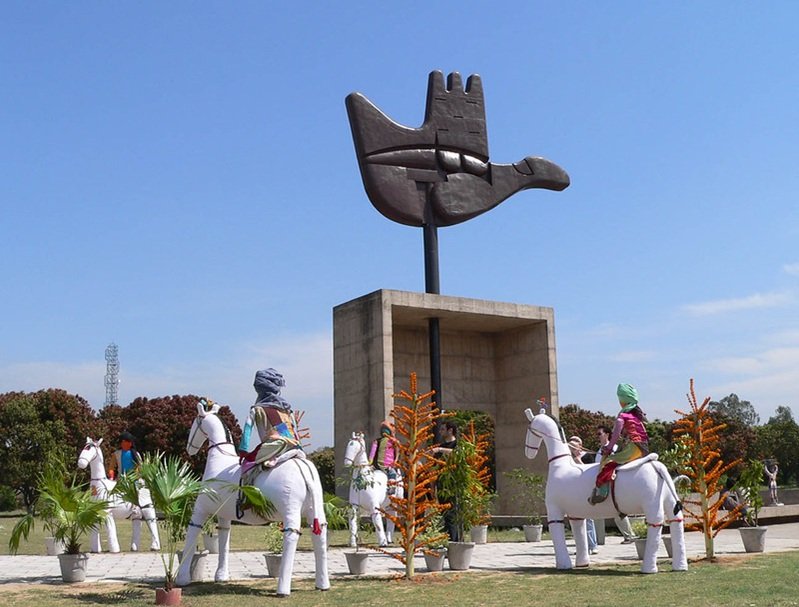
The Open Hand Monument Chandigarh: History, Meaning, Architecture,Timings & Other Facts
The Open Hand Monument Chandigarh – Standing against the backdrop of Chandigarh’s iconic Capitol Complex, the Open Hand Monument is more than a giant metal sculpture. It is the defining symbol of Chandigarh and one of the most recognized works of modern architecture in India. Designed by Swiss-French architect Le Corbusier, the monument reflects the ideals upon which Chandigarh was built—peace, openness, progress, and unity.
For decades, visitors, architects, historians, and students have admired the monument not only for its unique design but also for the powerful message it conveys. The Open Hand Monument remains a visual reminder of India’s post-independence aspirations and Chandigarh’s role as a city that embraced modernity while looking toward the future.
Why Chandigarh Needed a New Identity After Independence
To understand the significance of the Open Hand Monument, it is important to understand the story of Chandigarh itself.
Before India’s independence in 1947, Lahore served as the capital of the undivided Punjab province. Following Partition, Lahore became part of Pakistan, leaving Indian Punjab without a capital city. The newly independent nation faced the challenge of creating a modern administrative center that could symbolize hope, resilience, and progress.
India’s first Prime Minister, Jawaharlal Nehru, envisioned a city that would represent a break from colonial planning and showcase the aspirations of a new nation. He famously described Chandigarh as a city “unfettered by the traditions of the past.”
To bring this vision to life, the government appointed renowned architect Le Corbusier to design the city’s master plan. Along with creating government buildings, residential sectors, and public spaces, he envisioned a symbol that would capture the spirit of Chandigarh. That symbol eventually became the Open Hand Monument.
The Open Hand Monument: A Symbol with a Powerful Message
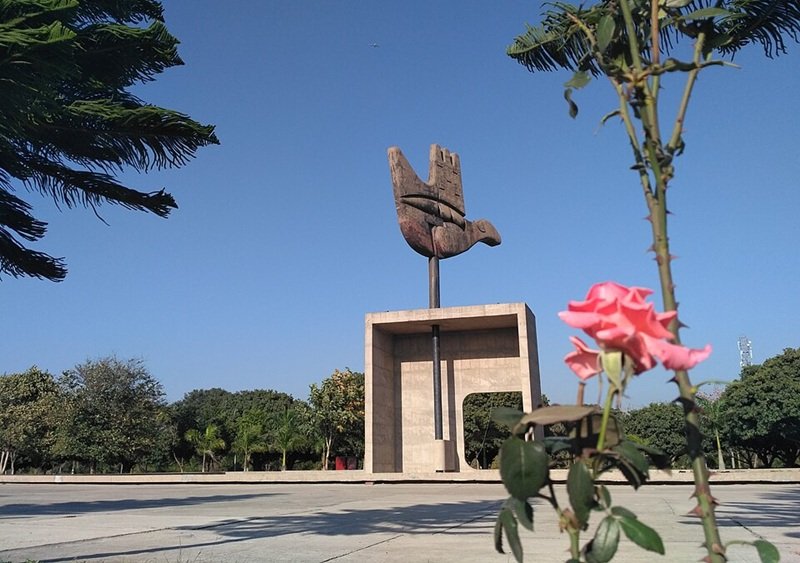
The Open Hand Monument represents one of Le Corbusier’s most cherished ideas.
Its message is simple yet profound:
“Open to give, open to receive.”
The open palm symbolizes the willingness to share knowledge, ideas, culture, and resources while remaining receptive to learning from others. Unlike monuments that commemorate wars or political victories, the Open Hand promotes cooperation, peace, and mutual respect.
The symbolism became especially meaningful in the aftermath of Partition, when millions of people were rebuilding their lives. Chandigarh emerged as a city of new beginnings, and the Open Hand embodied that spirit of reconciliation and optimism.
Today, the monument serves as the official emblem of Chandigarh and continues to represent the city’s progressive identity.
How Le Corbusier Conceived the Open Hand Monument
Many people assume the Open Hand was created specifically for Chandigarh, but the idea had been part of Le Corbusier’s artistic vision long before he arrived in India.
Throughout his career, he frequently sketched open hands in his notebooks, paintings, and architectural concepts. He viewed the hand as a universal symbol that transcended language, religion, and political boundaries.
When he began designing Chandigarh, he saw an opportunity to transform this recurring motif into a monumental public sculpture.
For Le Corbusier, the Open Hand was not merely decorative. It was a philosophical statement that reflected his belief in human cooperation and the exchange of ideas across cultures.
Although he developed the concept during the early planning stages of Chandigarh, the monument itself was completed after his death, making it one of the final realizations of his architectural legacy.
Open Hand Monument Architecture: A Masterpiece of Modernism
The Open Hand Monument architecture reflects the core principles of modernist design—simplicity, functionality, symbolism, and harmony with the environment.
Monument Dimensions
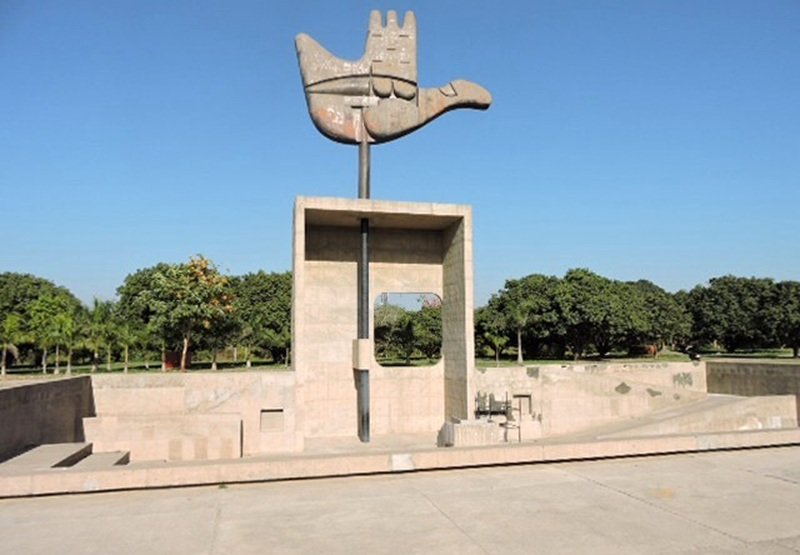
The structure stands approximately 26 meters (85 feet) high and dominates the landscape of the Capitol Complex.
Its large scale ensures visibility from a considerable distance while reinforcing its symbolic importance within the city’s administrative center.
The Rotating Metal Hand
The most distinctive feature of the monument is its giant metal hand mounted on a pivot.
Unlike traditional statues that remain static, the Open Hand rotates naturally with the wind. This movement creates a dynamic relationship between architecture and nature.
The constantly changing orientation of the hand reinforces the idea of adaptability, openness, and continuous exchange.
Geometric Simplicity
Le Corbusier avoided unnecessary ornamentation in his designs. The Open Hand follows the same philosophy.
Its clean lines and bold silhouette create a powerful visual impact without relying on elaborate decorative elements. This simplicity allows visitors to focus on the monument’s message rather than its embellishments.
Integration with the Landscape
The monument was carefully positioned within the Capitol Complex to complement the surrounding government buildings.
Rather than standing as an isolated sculpture, it forms part of a larger architectural narrative that includes the High Court, Secretariat, and Legislative Assembly.
The Open Hand and Chandigarh’s Capitol Complex
The Open Hand Monument occupies a prominent position within Chandigarh’s Capitol Complex, one of the most important examples of modern urban planning in the world.
The Capitol Complex includes:
- Punjab and Haryana High Court
- Legislative Assembly Building
- Secretariat Building
- Open Hand Monument
- Geometric Hill
- Tower of Shadows
Together, these structures reflect Le Corbusier’s vision of architecture serving both practical and symbolic purposes.
The monument acts as the spiritual centerpiece of the complex, representing the values that underpin the functioning of democratic institutions.
UNESCO Recognition and Global Importance
In 2016, UNESCO included Chandigarh’s Capitol Complex in the World Heritage listing titled:
“The Architectural Work of Le Corbusier, an Outstanding Contribution to the Modern Movement.”
This recognition placed Chandigarh among a select group of locations around the world that showcase Le Corbusier’s architectural achievements.
As part of this heritage ensemble, the Monument gained increased international attention and became a significant destination for architecture enthusiasts, researchers, and tourists.
Today, universities and architecture schools frequently study the monument as an example of how public art can communicate philosophical and civic ideals.
Visiting the Open Hand Monument Today
The Monument remains one of Chandigarh’s most visited landmarks.
Location
The monument is situated within the Capitol Complex in Sector 1, Chandigarh.
Best Time to Visit
The ideal time to visit is between October and March when weather conditions are pleasant and suitable for outdoor exploration.
Morning and evening hours offer excellent lighting for photography and sightseeing.
Nearby Attractions
Visitors often combine their visit with other notable Chandigarh attractions:
- Capitol Complex
- Sukhna Lake
- Rock Garden
- Le Corbusier Centre
- Government Museum and Art Gallery
Photography Opportunities
The monument’s dramatic silhouette, combined with the open landscape of the Capitol Complex, makes it one of the most photographed architectural landmarks in Chandigarh.
Lesser-Known Facts About the Open Hand Monument
It Is Chandigarh’s Official Emblem
The Open Hand appears in official representations of the city and has become synonymous with Chandigarh’s identity.
The Hand Moves with the Wind
Unlike most public monuments, the sculpture rotates naturally according to wind direction.
It Reflects a Universal Philosophy
The symbol does not represent any religion, political ideology, or community. Instead, it promotes universal values of peace and cooperation.
The Concept Predates Chandigarh
Le Corbusier had been drawing and developing the Open Hand symbol years before Chandigarh was planned.
It Was Completed After Le Corbusier’s Death
Although he conceived the idea, the final monument was completed posthumously, ensuring his vision lived on.
Why the Open Hand Monument Still Matters Today
More than seventy years after Chandigarh was planned, the Monument remains remarkably relevant.
In an increasingly interconnected world, the monument’s message of openness, dialogue, and mutual exchange continues to resonate. It serves as a reminder that cities are not merely collections of buildings but expressions of shared values and aspirations.
For Chandigarh, the Open Hand remains a powerful symbol of identity. For visitors, it offers an opportunity to reflect on the ideals that shaped one of India’s most ambitious urban experiments.
FAQs
1.Who designed the Open Hand Monument of Chandigarh?
The monument was designed by renowned Swiss-French architect Le Corbusier, who also created Chandigarh’s master plan.
2. What is the meaning of the Open Hand Monument?
The monument symbolizes peace, openness, reconciliation, and the philosophy of being “open to give and open to receive.”
3. Why is the Open Hand Monument famous?
It is Chandigarh’s official emblem and one of the most significant examples of modernist public art in India.
4. Where is the Open Hand Monument located?
The monument is located inside the Capitol Complex in Sector 1, Chandigarh.
5. Is the Open Hand Monument part of a UNESCO World Heritage Site?
Yes. It forms part of Chandigarh’s Capitol Complex, which received UNESCO World Heritage status in 2016.
Conclusion
The Open Hand Monument is not simply a landmark—it is the soul of Chandigarh expressed through architecture. Conceived by Le Corbusier as a symbol of peace, exchange, and progress, the monument reflects the ideals upon which India’s first planned city was built. Its rotating metal hand, powerful symbolism, and place within the UNESCO-listed Capitol Complex continue to attract visitors from across the globe. As Chandigarh evolves, the Open Hand remains a timeless reminder of openness, unity, and the enduring power of visionary design.