
Sukhna Wildlife Sanctuary Guide: Wildlife, Trekking, Entry & Things to Know
Sukhna Wildlife Sanctuary Guide – The Sukhna Wildlife Sanctuary is one of the most important natural areas around Chandigarh and an excellent destination for people who want to experience the Shivalik landscape away from the city’s busy roads.
Located about 1 km northeast of Sukhna Lake, the sanctuary forms part of the lake’s catchment area in the Shivalik Hills. It covers approximately 2,600 hectares and plays an important role in protecting the forest ecosystem as well as controlling soil erosion and maintaining the Sukhna Lake catchment.
Unlike Sukhna Lake, where visitors can arrive freely for recreation, the wildlife sanctuary is a protected forest area. Visitors need an entry permit before entering, making it a very different experience from a normal city park.
Where Is Sukhna Wildlife Sanctuary?
Sukhna Wildlife Sanctuary is situated on the northeastern side of Chandigarh around the forested Shivalik foothills.
There are two official entry points:
- Kansal Gate: Accessed through Khuda Alisher or Kaimbwala in Chandigarh.
- Nepli Gate: Accessed through Suketri village in Haryana.
The sanctuary includes the Nepli and Kansal forest areas, with forest trails, water bodies, watchtowers and inspection/rest houses.
Its proximity to Sukhna Lake makes it possible to combine a nature-focused Chandigarh itinerary with other attractions around the lake.
How to Visit Sukhna Wildlife Sanctuary
One of the most important things to know before visiting is that you cannot simply walk into the sanctuary without permission.
The Chandigarh Administration requires visitors to submit an application/request letter to the Conservator of Forests & Chief Wildlife Warden, U.T. Chandigarh for an entry permit. The application should mention:
- Place to be visited — Nepli or Kansal
- Number of people
- Mode of transport
- Date and time of visit
- Applicant’s full address
- Applicant’s telephone number
The official visitor information states that the sanctuary has a carrying capacity of 200 visitors per day, with permits for up to 100 visitors each for Nepli and Kansal forests. Permits are issued on a first-come, first-served basis.
Tip: Apply in advance rather than arriving at the gate expecting same-day entry.
Sukhna Wildlife Sanctuary Timings
The sanctuary can be visited from sunrise to sunset. Visitors are not permitted to remain inside after nightfall.
The sanctuary is also open on Saturdays and Sundays, according to the Chandigarh Administration’s official visitor information.
Because access is permit-based, visitors should confirm the latest permit procedure and applicable requirements before planning their trip.
Wildlife You Can See
Sukhna Wildlife Sanctuary supports a diverse range of mammals, birds, reptiles, butterflies and other organisms.
The Chandigarh Administration lists wildlife including:
- Sambar
- Spotted deer or chital
- Wild boar
- Pangolin
- Jackal
- Jungle cat
- Small Indian civet
- Porcupine
- Hanuman langur
- Rhesus macaque
- Indian hare
- Mongoose
- Squirrels
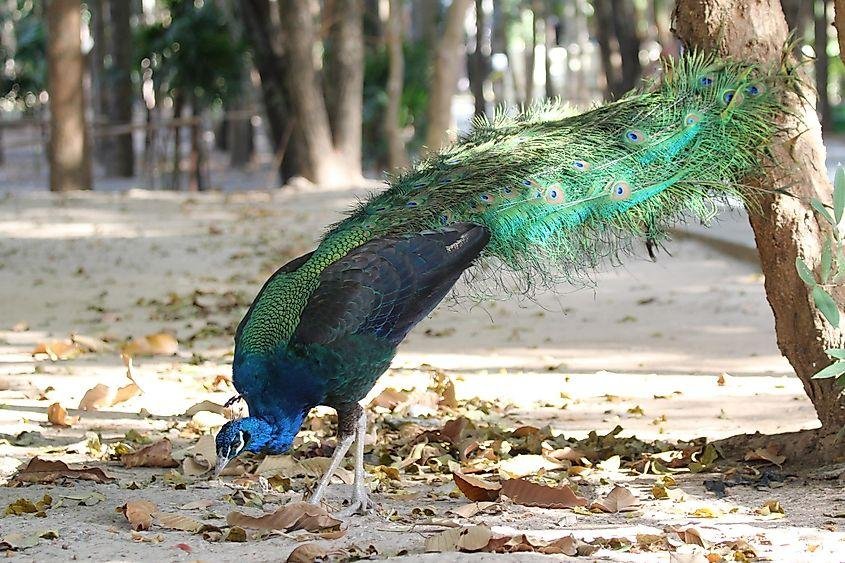
The sanctuary also supports a large variety of birds. Species listed by the administration include peacocks, red jungle fowl, grey partridge, kingfishers, hornbills, woodpeckers, rollers, hoopoes, parrots, doves, ducks, grebes, bee-eaters, bulbuls and mynas.
Reptiles recorded in the sanctuary include snakes such as cobras, rat snakes, common kraits, Russell’s vipers and Indian pythons, along with monitor lizards and turtles.
Trekking at Sukhna Wildlife Sanctuary
Trekking and nature trails are among the main attractions of the sanctuary.
The Chandigarh Forest Department has created several nature trails ranging from approximately 2.5 km to 8 km. These routes pass through forests, hillsides and water bodies, with gradients ranging from gentle to steep.
Some of the listed trails include:
| Trail | Approx. Distance |
|---|---|
| Nepli Inspection Hut to Kansal Log Hut | 8 km |
| Nepli Gate to Nepli Inspection Hut via Ghareri | 5 km |
| Nepli Gate to Nathewala and back | 6 km |
| Nepli Gate to Nepli Inspection Hut via Nathewala | 6 km |
| Kansal Log Hut to Nepli Gate | 6.5 km |
| Kansal Log Hut to Sukhomajri | 5 km |
| Kansal Log Hut towards Bhagwanpura and back | 5 km |
| Kansal Log Hut towards Nepli and back | 2.5 km |
The trails provide opportunities to observe the sanctuary’s vegetation, wildlife habitat, water bodies and soil-conservation work.
Watchtowers and Forest Views
The sanctuary contains traditional-style watchtowers along its nature trails. The Chandigarh Administration says these structures also help with forest-fire detection and monitoring against illegal activities.
The watchtowers provide views of the Shivalik Hills and surrounding forest landscape.
There are also three notable accommodation/rest structures within the sanctuary area:
- Kansal Log Hut
- Kansal Inspection Hut
- Nepli Inspection Hut
The forest department has also described water bodies around the Kansal and Nepli facilities as part of the sanctuary’s visitor environment.
Best Things to Do at Sukhna Wildlife Sanctuary
1. Go on a Nature Trail
Walking through the forest is one of the best ways to experience the sanctuary. The trails allow visitors to observe different vegetation zones, birds and wildlife habitats.
2. Birdwatching
With a wide range of resident and seasonal birds, the sanctuary is particularly interesting for birdwatchers.
Carry binoculars and maintain silence rather than trying to approach birds.
3. Wildlife Photography
Cameras are permitted, making the sanctuary suitable for nature photography. However, visitors should avoid flash photography and maintain a safe distance from wildlife.
4. Explore the Shivalik Landscape
The combination of forest, hills, streams and water bodies provides a completely different atmosphere from central Chandigarh.
5. Learn About Conservation
The sanctuary is not simply a recreational forest. Its conservation work is closely linked to the protection of the Sukhna Lake catchment.
Why Sukhna Wildlife Sanctuary Is Important
The sanctuary has an important environmental role.
Sukhna Lake experienced severe siltation during the 1960s and 1970s because of soil erosion in its catchment. According to the Chandigarh Administration, by 1988 around 66% of the lake’s original water-holding capacity had been lost to siltation.
Afforestation and soil-and-water conservation measures in the catchment subsequently helped reduce the rate of siltation and contributed to the development of a healthy forest ecosystem.
The sanctuary therefore helps protect both wildlife habitat and the ecological health of Sukhna Lake.
Flora of Sukhna Wildlife Sanctuary
The sanctuary contains a mixture of trees, shrubs, herbs, grasses and climbers.
The Chandigarh Administration’s recent environmental documentation records approximately 40 tree species, 28 shrub species, 28 herb species and 16 grass species, alongside a broad range of animal and insect species.
Conservation efforts have also included the removal of invasive lantana, allowing indigenous vegetation and wildlife grazing areas to regenerate.
Rules for Visitors
Sukhna Wildlife Sanctuary is a protected area, so responsible tourism is essential.
Visitors should:
- Keep noise to a minimum.
- Stay on designated trails.
- Maintain a safe distance from animals.
- Avoid feeding wildlife.
- Carry water and necessary personal items.
- Take all waste back or dispose of it properly.
- Avoid bright clothing where possible.
- Avoid perfumes.
- Follow instructions from forest officials.
The sanctuary prohibits activities such as hunting, carrying firearms, damaging vegetation, loud music, lighting fires and cooking. Plastic bags and containers are also prohibited inside the sanctuary under the visitor guidelines.
What to Carry
The official visitor guidelines allow items such as:
- Camera
- Binoculars
- Umbrella
- Walking stick
- Prepared food/eatables
- Water bottle
For trekking, comfortable walking shoes, a hat and basic sun protection are also practical choices.
Best Time to Visit
For a comfortable outdoor experience, early morning is generally preferable because temperatures are usually lower and wildlife and bird activity can be easier to observe.
Winter can be particularly pleasant for trekking and birdwatching. However, wildlife sightings are never guaranteed, and visitors should treat the sanctuary as a protected ecosystem rather than a conventional safari destination.
Sukhna Wildlife Sanctuary vs Sukhna Lake
It is important not to confuse the two attractions.
| Sukhna Lake | Sukhna Wildlife Sanctuary |
|---|---|
| Urban recreational destination | Protected forest area |
| Free public access | Entry permit required |
| Boating and leisure activities | Nature trails and trekking |
| Located within Chandigarh | Forested Shivalik catchment |
| Popular for evening visits | Best explored during daylight |
You can visit both during the same Chandigarh trip, but they offer very different experiences.
Important Eco-Sensitive Area
The ecological importance of the sanctuary extends beyond its formal boundary.
The Ministry of Environment, Forest and Climate Change has notified an Eco-Sensitive Zone around the Sukhna Wildlife Sanctuary in Haryana, with the notification describing areas extending up to 2 km from portions of the sanctuary boundary.
The wider conservation landscape is important because development in the Sukhna catchment can affect water flow, soil erosion, wildlife habitat and the ecological health of Sukhna Lake.
Sukhna Wildlife Sanctuary Guide
| Detail | Information |
|---|---|
| Location | Northeast of Sukhna Lake |
| Landscape | Shivalik Hills |
| Area | About 2,600 hectares |
| Entry | Permit required |
| Gates | Nepli and Kansal |
| Visiting hours | Sunrise to sunset |
| Main activities | Trekking, birdwatching, nature photography |
| Wildlife | Deer, sambar, wild boar, pangolin, birds, reptiles |
| Nature trails | Approximately 2.5–8 km |
| Night stay | Visitors cannot remain inside overnight |
Final Thoughts
The Sukhna Wildlife Sanctuary Guide is essential reading for anyone planning to explore Chandigarh beyond its famous gardens, monuments and shopping areas. The sanctuary offers forests, nature trails, wildlife, birdwatching opportunities and panoramic Shivalik landscapes within easy reach of the city.
However, this is a protected wildlife habitat rather than an ordinary tourist park. Obtaining the required permit, following forest rules, staying quiet and respecting wildlife are all essential.
If you are looking for a peaceful outdoor experience around Chandigarh, a permitted visit to Sukhna Wildlife Sanctuary can provide a completely different perspective of the region’s natural landscape.
Conservation Efforts at Sukhna Lake: Protecting Chandigarh’s Lifeline for Future Generations