
Preserving Mid-Century Modern Architecture: Why Chandigarh’s Legacy Matters
Preserving Mid-Century Modern Architecture is more than a design style—it is a reflection of a transformative period in global history. Characterized by clean lines, functional spaces, innovative materials, and a strong connection between architecture and urban planning, this movement reshaped cities across the world. In India, no city represents this architectural heritage better than Chandigarh.
Designed primarily by Le Corbusier, Pierre Jeanneret, Jane Drew, and Maxwell Fry, Chandigarh remains one of the world’s most significant examples of mid-century modern urbanism. As cities continue to evolve, preserving this architectural legacy has become an increasingly important challenge for conservationists, architects, policymakers, and citizens alike. Experts have long emphasized that Chandigarh’s value lies not only in its individual buildings but also in its overall urban planning principles, open spaces, and architectural character.
Understanding Preserving Mid-Century Modern Architecture
The mid-century modern movement emerged between the 1940s and 1970s and emphasized simplicity, functionality, and innovation. Architects sought to create buildings that responded to modern lifestyles while making efficient use of materials and space.
Key features of mid-century modern architecture include:
- Minimal ornamentation
- Open floor plans
- Geometric forms
- Integration with nature
- Extensive use of concrete, glass, and steel
- Climate-responsive design
Chandigarh became one of the most ambitious experiments of this movement, serving as the only fully realized city designed according to Le Corbusier’s urban planning philosophy.
Why Chandigarh Is a Global Heritage Landmark
Following India’s independence, Chandigarh was envisioned as a symbol of progress and modern nation-building. The city introduced a revolutionary approach to urban planning through organized sectors, hierarchical roads, civic spaces, and modern government buildings.
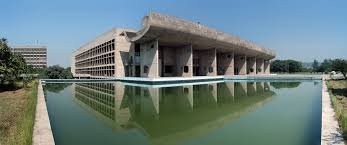
Today, the Capitol Complex stands as the most visible representation of this legacy. Its inclusion in UNESCO’s World Heritage List in 2016 confirmed the international significance of Le Corbusier’s contribution to modern architecture.
However, preservation extends beyond iconic structures. Scholars increasingly argue that Chandigarh’s urban layout, public spaces, landscaping, and civic planning deserve equal recognition as cultural heritage.
The Challenges of Preserving Mid-Century Modern Architecture
Unlike ancient monuments built from stone and brick, mid-century modern buildings often rely on reinforced concrete and experimental construction techniques. These materials present unique conservation challenges.
Many of Chandigarh’s landmark structures have experienced weathering, concrete deterioration, moisture damage, and structural aging over time. Conservation experts have noted that restoring exposed concrete requires specialized methods that preserve the original appearance and material integrity of the buildings.
Modern heritage also faces another challenge: public perception. While centuries-old monuments are often immediately recognized as heritage assets, twentieth-century architecture is sometimes viewed as ordinary or replaceable. Researchers studying Chandigarh have highlighted the need for greater awareness of modern architectural heritage among both residents and policymakers.
Conservation Beyond Buildings
Preservation is not limited to protecting individual structures. Chandigarh’s identity is rooted in a broader urban ecosystem that includes:
- Sector planning
- Green belts
- Open spaces
- Pedestrian pathways
- Road hierarchy
- Civic plazas
- Public furniture
Urban conservation experts argue that protecting Chandigarh requires safeguarding these interconnected elements rather than focusing solely on landmark buildings. The city’s planning principles of “sun, space, and verdure” remain central to its architectural significance.
Even seemingly ordinary design elements—such as furniture, street infrastructure, and public installations—have become recognized as valuable components of Chandigarh’s heritage. Global interest in Pierre Jeanneret’s furniture designs has further demonstrated the cultural importance of preserving the city’s design legacy.
Recent Preservation Concerns
The importance of active conservation became evident recently when concerns were raised about the deteriorating condition of the Le Corbusier Centre in Sector 19. Heritage experts highlighted issues such as structural deterioration, neglected exhibits, and inadequate maintenance. The matter drew significant public attention, eventually prompting judicial intervention and restoration efforts.
This situation serves as a reminder that heritage preservation requires ongoing commitment rather than one-time restoration projects.
The Role of Citizens in Heritage Protection
Le Corbusier believed that the future of Chandigarh depended on its citizens becoming guardians of the city’s planning ideals. That message remains relevant today. Community awareness, educational programs, responsible tourism, and public participation are essential for successful heritage conservation.
Residents play a critical role in protecting the city’s architectural identity by supporting preservation initiatives, respecting heritage regulations, and advocating for sustainable development.
Balancing Growth and Conservation
One of the greatest challenges facing Chandigarh is balancing urban growth with heritage protection. Population growth, changing infrastructure demands, and modernization pressures often create tension between development and preservation.
Experts continue to debate how Chandigarh can accommodate future needs while maintaining the characteristics that make it unique. Many conservation advocates emphasize that sustainable growth should complement rather than compromise the city’s architectural identity.
The goal is not to freeze the city in time but to ensure that future development respects its original planning principles and cultural significance.
Conclusion
Preserving mid-century modern architecture is about more than protecting old buildings. It is about safeguarding ideas, planning philosophies, cultural values, and urban identities that continue to influence cities around the world.
Chandigarh stands as one of the most important examples of modern architectural heritage ever created. From the Capitol Complex and public institutions to sector planning and urban design, every element contributes to a larger story of innovation and nation-building.
As the City Beautiful moves into the future, Preserving Mid-Century Modern Architecture will remain essential—not only for Chandigarh but for the global architectural community. By protecting these achievements today, future generations will continue to learn from and appreciate one of the twentieth century’s greatest urban experiments.