
Evolution of the Capital Complex: Chandigarh’s Architectural Masterpiece
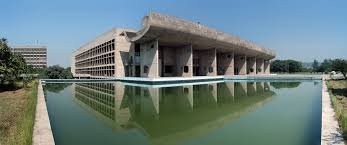
The city of Chandigarh is known worldwide for its remarkable urban planning, modern architecture, and rich heritage. At the heart of this architectural excellence lies the Capital Complex of Chandigarh, one of India’s most iconic landmarks and a symbol of the country’s post-independence aspirations. Designed by the legendary architect Le Corbusier, the complex represents a revolutionary approach to civic architecture and urban planning.
Over the decades, the Capital Complex of Chandigarh has evolved from a bold architectural vision into a globally recognized heritage site. Today, it attracts architects, students, historians, and tourists from around the world who come to witness one of the finest examples of modernist architecture.
The Birth of a New Capital
Following India’s independence and the partition of Punjab in 1947, the need for a new capital city became urgent. The government envisioned a city that would symbolize progress, democracy, and a modern future. Chandigarh was selected for this ambitious project, and Le Corbusier was entrusted with designing its administrative heart.
The concept for the capital complex in Chandigarh was developed as the city’s governing center. It was intended to house the three pillars of democracy—the legislature, judiciary, and executive—within a single monumental precinct.
This vision gave rise to one of the most celebrated civic spaces in architectural history.
Planning the Capital Complex
The design of the Capital Complex of Chandigarh reflected Le Corbusier’s belief that architecture should inspire civic pride while serving practical functions. He envisioned a monumental complex that would symbolize the strength and ideals of a newly independent nation.
The capital complex in Chandigarh was strategically located in Sector 1, at the northern edge of the city, with the Shivalik Hills serving as a dramatic natural backdrop. This placement reinforced the importance of the complex as the symbolic “head” of Chandigarh.
From the beginning, the project was designed to balance functionality, aesthetics, and symbolism.
Key Structures Within the Complex
The evolution of the Capital Complex of Chandigarh can be understood through its major architectural landmarks, each designed with a specific purpose and identity.
The Secretariat Building
The Secretariat is one of the largest structures within the capital complex in Chandigarh. It houses various government departments and administrative offices. Its massive concrete façade, sun breakers, and geometric design demonstrate Le Corbusier’s innovative architectural approach.
The High Court
The Punjab and Haryana High Court was among the first buildings completed within the Capital Complex of Chandigarh. The structure is famous for its colorful façade, monumental roof, and bold architectural character.
The High Court remains one of the most photographed buildings in Chandigarh today.
The Legislative Assembly
The Legislative Assembly serves as another defining element of the capital complex in Chandigarh. Its unique hyperbolic roof and monumental assembly chamber symbolize democratic governance and civic participation.
The Open Hand Monument
The Open Hand Monument has become the universal symbol of Chandigarh. Positioned within the Capital Complex of Chandigarh, it represents the philosophy of “open to give, open to receive” and reflects ideals of peace and reconciliation.
Architectural Evolution Through the Years
When the Capital Complex of Chandigarh was initially conceived, it represented a radical departure from traditional Indian architecture. The use of exposed concrete, geometric forms, and monumental civic spaces was unlike anything previously seen in the country.
Over time, the capital complex in Chandigarh gained international recognition as architects and scholars began to appreciate its innovative design principles. The complex came to be viewed not merely as a government center but as a landmark achievement in modern architecture.
As urban planning evolved worldwide, Chandigarh’s Capitol Complex continued to serve as a case study for effective civic design and sustainable city development.
UNESCO World Heritage Recognition
A major milestone in the evolution of the Capital Complex of Chandigarh came in 2016 when it was included in the UNESCO World Heritage List as part of “The Architectural Work of Le Corbusier, an Outstanding Contribution to the Modern Movement.”
This recognition highlighted the global importance of the capital complex in Chandigarh and reinforced its status as one of the world’s most significant architectural achievements.
UNESCO recognition also encouraged greater preservation efforts and increased tourism to the site.
Tourism and Heritage Conservation
Today, the Capital Complex of Chandigarh is one of the city’s most visited attractions. Guided tours allow visitors to explore the High Court, Secretariat, Legislative Assembly, Open Hand Monument, Geometric Hill, and Tower of Shadows.
The growing popularity of the capital complex in Chandigarh has led to enhanced conservation initiatives aimed at protecting its architectural integrity for future generations.
These preservation efforts ensure that visitors can continue to appreciate the original vision of Le Corbusier while learning about Chandigarh’s unique history.
Why the Capital Complex Remains Relevant
The Capital Complex of Chandigarh continues to inspire architects, urban planners, and policymakers because of its timeless design principles. Its emphasis on functionality, symbolism, environmental responsiveness, and civic engagement remains relevant in contemporary urban development.
Similarly, the capital complex in Chandigarh demonstrates how architecture can shape national identity and reflect democratic values through thoughtful design.
As cities around the world face challenges related to sustainability and urban growth, Chandigarh’s administrative center serves as an enduring model of visionary planning.
Conclusion
The journey of the Capital Complex of Chandigarh is a story of innovation, ambition, and architectural excellence. From its origins as the administrative heart of a newly planned city to its recognition as a UNESCO World Heritage Site, the complex has continually evolved while preserving its original significance.
Today, the capital complex in Chandigarh stands as a testament to the genius of Le Corbusier and the determination of a young nation to build a modern future. Whether viewed as an architectural masterpiece, a historical landmark, or a symbol of democratic governance, the complex remains one of India’s greatest cultural and architectural treasures.