Highest Dam in India – Complete Guide & Key Insights
Highest Dam in India (2026 Engineering Facts, River Details & Top 5 Rankings) – Dams are among the most critical multi-purpose engineering marvels driving India’s agrarian economy and energy independence. Spanning mighty glacial and peninsular rivers, these massive structures regulate monsoonal floods, store irrigation reserves for millions of hectares of farmland, supply drinking water to mega-cities, and generate clean hydroelectricity.
For geography students, competitive exam aspirants (UPSC, SSC, State PSC), and engineering enthusiasts asking which is the highest dam in India, the definitive answer is the Tehri Dam in Uttarakhand. Soaring to a monumental height of 260.5 meters (855 feet), it stands as the tallest dam in India and ranks among the top 15 highest dams in the world. In this comprehensive 2026 reference guide, we examine Tehri Dam’s construction specifications, power generation capacity, structural design, ecological background, and how it compares with Bhakra, Sardar Sarovar, and Hirakud.
Dam Specification
Official Technical Details
Official Dam Name
Tehri Dam (Tehri Hydro Power Complex)
Total Height (from deepest foundation)
260.5 meters (855 feet) – Highest in India
Crest Length
575 meters (1,886 feet)
Structural Dam Type
Earth and Rock-fill Embankment Dam
Impounded River
Bhagirathi River (Primary headstream of the River Ganga)
Location & District
New Tehri, Tehri Garhwal District, Uttarakhand, India
Tehri Dam: Engineering Architecture & Construction Marvel
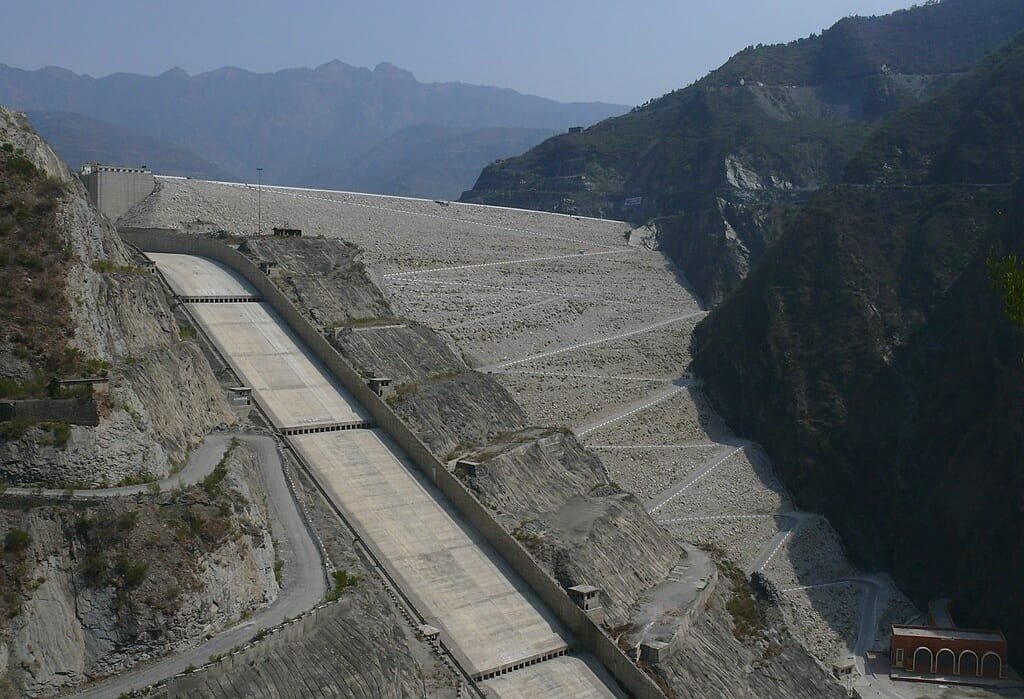
Commissioned in 2006 by THDC India Limited, Tehri Dam sits at the confluence of the Bhagirathi and Bhilangna rivers in the Garhwal Himalayas. Unlike rigid concrete gravity dams, Tehri was engineered as an earth and rock-fill embankment dam with a central clay core. This specific design was chosen to absorb and dissipate seismic energy, as the dam is situated in the seismically sensitive Himalayan Seismic Zone V.
Massive Embankment Dimensions: The dam structure features a base width of 1,128 meters tapering to a crest width of 20 meters, utilizing over 25 million cubic meters of earth and compacted rock.
High-Capacity Spillway System: Designed to safely discharge a Probable Maximum Flood (PMF) of 15,540 cubic meters per second, utilizing a chute spillway alongside four shaft spillways drilled directly into the mountain bedrock.
Underground Powerhouse: The turbines and transformers are constructed inside an underground powerhouse cavern, safeguarding vital generation equipment from landslides and extreme surface weather.
Top 5 Highest Dams in India (By Height & Type)
While Tehri Dam holds the absolute elevation record, India’s top dams vary substantially by architectural type and function:
Rank
Dam Name
Height (Meters / Feet)
Dam Structural Type
River Impounded
State
1
Tehri Dam
260.5 m (855 ft)
Earth & Rock-Fill Embankment
Bhagirathi River
Uttarakhand
2
Bhakra Dam
226 m (741 ft)
Concrete Straight Gravity
Sutlej River
Himachal Pradesh
3
Idukki Dam
168.9 m (554 ft)
Double-Curvature Arch Dam
Periyar River
Kerala
4
Koldam Dam
167 m (548 ft)
Rock-fill Embankment
Sutlej River
Himachal Pradesh
5
Sardar Sarovar Dam
163 m (535 ft)
Concrete Gravity
Narmada River
Gujarat
Structural Disambiguation: Highest vs. Longest vs. Largest Dam
In competitive examinations and general knowledge quizzes, questions often test the fine distinction between height, length, and reservoir storage:
The Highest Dam in India (Vertical Height): Tehri Dam (260.5 m), measured from its deepest bedrock foundation to the road crest.
The Highest Straight Gravity Dam in India: Bhakra Dam (226 m), famously described by Prime Minister Jawaharlal Nehru as a “Temple of Resurgent India.”
The Longest Dam in India and the World: Hirakud Dam in Odisha. Built across the Mahanadi River, its total composite barrier extends over 25.79 km (16 miles), with a main masonry and earthen dike section stretching 4.8 km.
The Largest Dam in India by Water Storage Capacity: Indira Sagar Dam in Madhya Pradesh on the Narmada River, creating a gross reservoir storage capacity of 12.22 billion cubic meters (MCM).
The Oldest Dam in India: Kallanai Dam (Grand Anicut) built across the River Kaveri in Tamil Nadu by Chola king Karikalan over 2,000 years ago.
Tehri Lake & Multi-Purpose Benefits
The impoundment behind the dam created the massive Swami Ramtirtha Sagar (Tehri Lake), an artificial water body covering 52 square kilometers:
Clean Hydroelectric Power: Supplies base and peaking electrical power to Uttarakhand, Uttar Pradesh, Delhi, Punjab, Haryana, Chandigarh, Rajasthan, and Jammu & Kashmir.
Mega-City Drinking Water Supply: Delivers over 300 cusecs of potable drinking water to New Delhi (serving approximately 4 million residents) and 200 cusecs to urban centers across Uttar Pradesh.
Agricultural Irrigation: Provides year-round stabilized canal irrigation to over 8.7 lakh (870,000) hectares of farmland across the fertile Gangetic plains.
Tehri Lake Tourism & Water Sports: The reservoir has emerged as a prominent adventure tourism hub in Uttarakhand, hosting jet skiing, speed boating, kayaking, parasailing, and floating eco-resorts.
Environmental Impact & The Historic Anti-Tehri Movement
The realization of India’s tallest dam was accompanied by prolonged environmental and social debate. The construction required the complete submergence of historic Old Tehri town and displaced over 100,000 residents, who were rehabilitated in the planned hilltop city of New Tehri.
Renowned environmentalist and Chipko Movement leader Sunderlal Bahuguna spearheaded prolonged hunger strikes and demonstrations during the 1980s and 1990s. Activists highlighted concerns regarding the ecological impact on the Bhagirathi’s aquatic biodiversity, reservoir-induced seismicity (RIS), and catastrophic downstream flood risks in the event of an earthquake fault slip. In response, international geological reviews mandated seismic dampening reinforcements, cementing Tehri as one of the most thoroughly analyzed rock-fill structures globally.
How to Visit Tehri Dam & Lake
From Rishikesh: ~75 km (approx. 2.5 hours drive via NH-34 and Chamba road).
From Dehradun: ~110 km (approx. 3.5 hours drive via Mussoorie or Rishikesh bypass).
Nearest Airport: Jolly Grant Airport, Dehradun (DED) – ~85 km.
Nearest Railway Station: Rishikesh / Yog Nagari Rishikesh (~75 km) or Haridwar (~100 km).
The highest dam in India is the Tehri Dam, standing at a height of 260.5 meters (855 feet) above its foundation in Uttarakhand.
On which river is the highest dam in India built?
Tehri Dam is constructed across the Bhagirathi River, the primary headstream that merges with the Alaknanda at Devprayag to form the River Ganga.
Is Bhakra Dam higher than Tehri Dam?
No. Tehri Dam (260.5 m) is taller than Bhakra Dam (226 m). However, Bhakra Dam remains the highest concrete straight gravity dam in India.
What is the difference between the highest and longest dam in India?
The highest dam refers to vertical structure height (Tehri Dam, 260.5 meters), whereas the longest dam refers to lateral horizontal barrier length across the riverbed (Hirakud Dam in Odisha, 25.8 km total length).



Comments are closed.